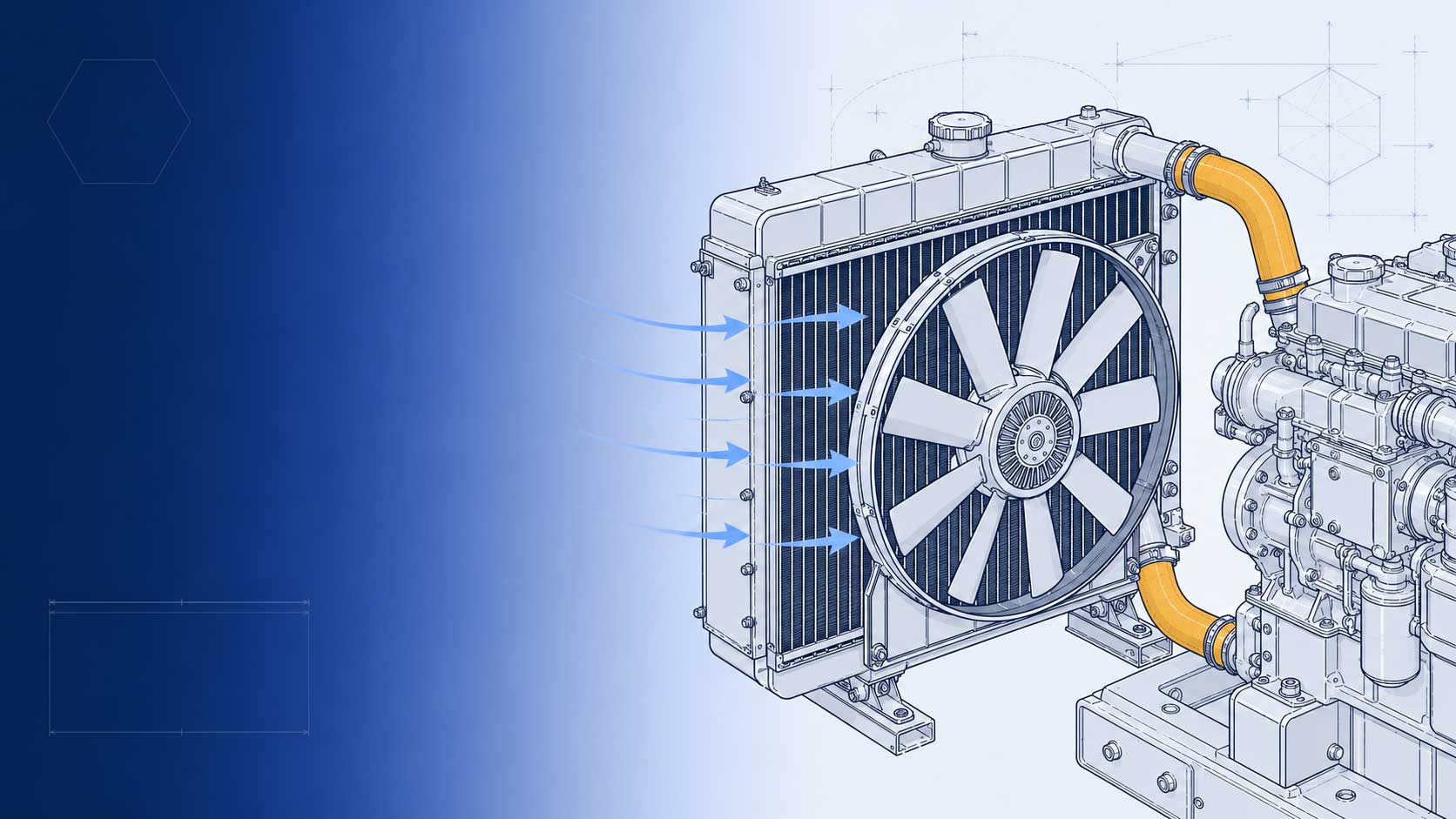
Generator Radiator: Maintenance, Cleaning & Common Problems
01How a generator radiator works
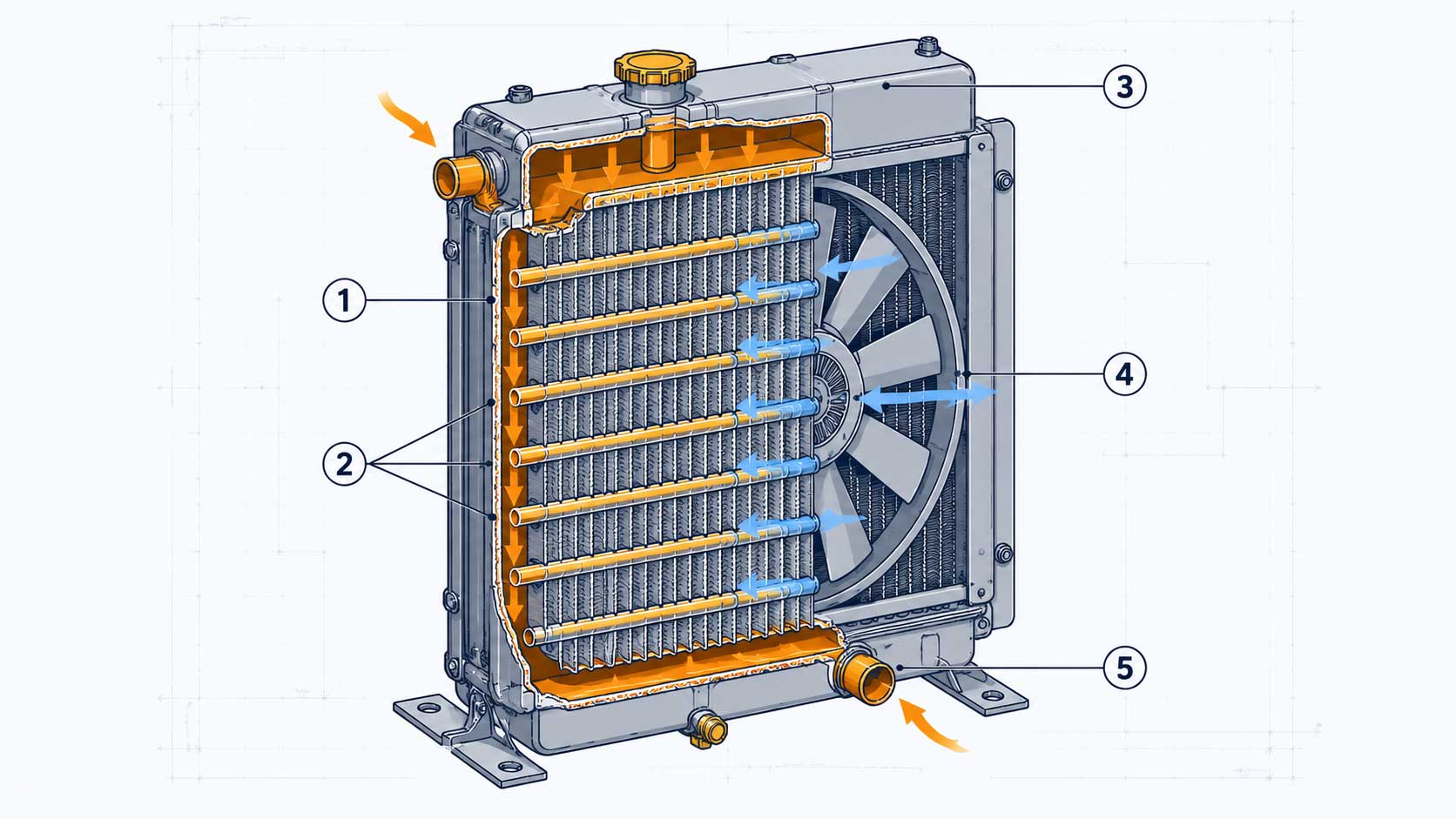
A generator radiator disperses the heat the engine produces, keeping it at its optimal operating temperature and reducing thermal stress. The core — thin tubes and fins — is where cooling happens: hot coolant flows through the tubes, heat transfers into the fins, and the fan blows air across them.
Key parts: radiator core, cooling fan, water pump, thermostat, coolant, radiator cap, and hoses. Coolant (a 50/50 antifreeze-and-water mix in most climates) fills the radiator and the engine jacket.
02How to clean & maintain it
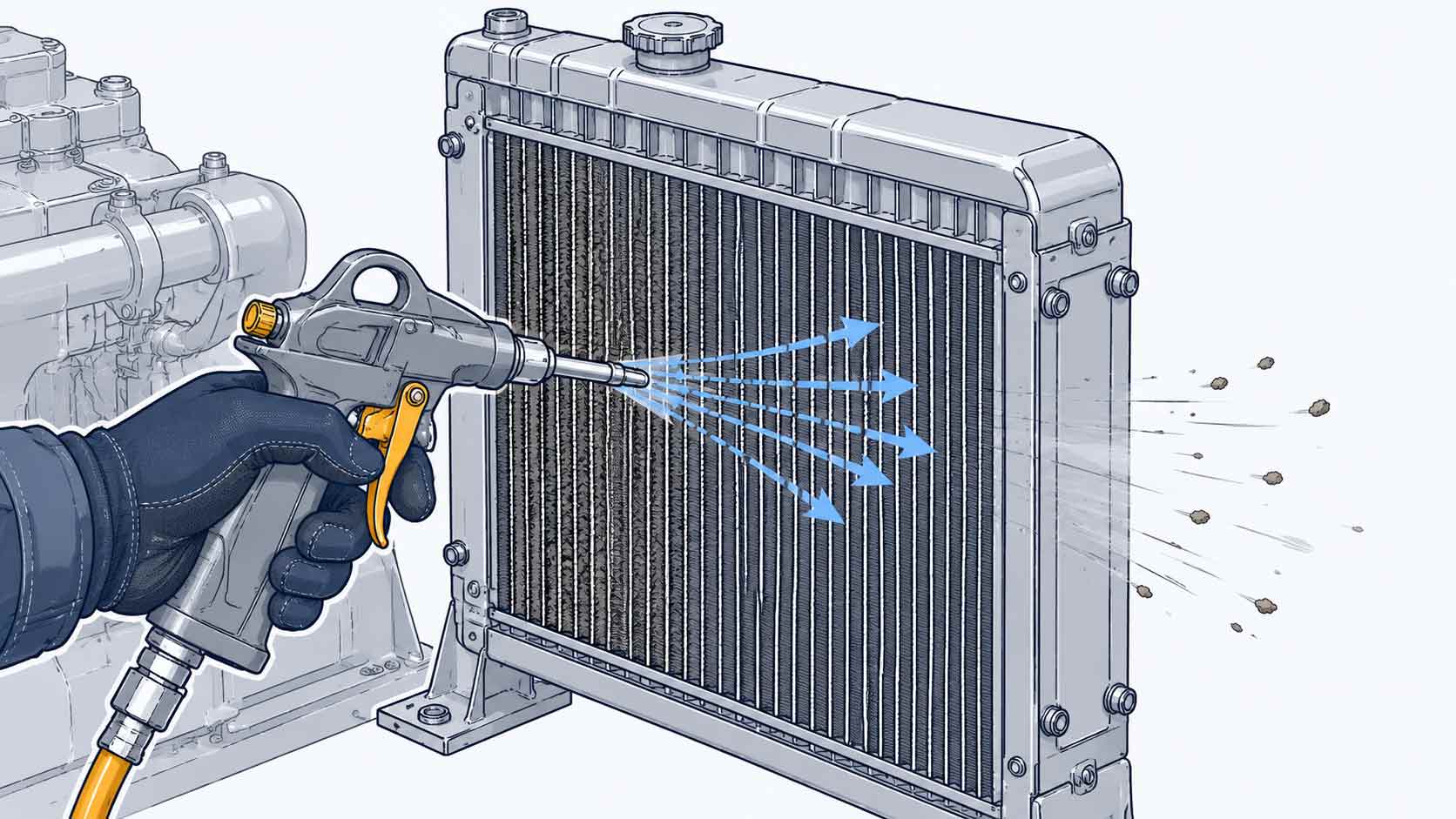
Clean the core with low-pressure water or compressed air, blowing from the engine side outward. Never use a pressure washer — high pressure bends the fins. Flush the inside every ~5 years to remove scale, then refill with fresh coolant.
- Check coolant level & condition
- Clear leaves, dust & debris from the fins and intakes
- Inspect hoses, clamps & the radiator cap for leaks
- Check the fan & fan belt for wear or slippage
03Common radiator problems & symptoms
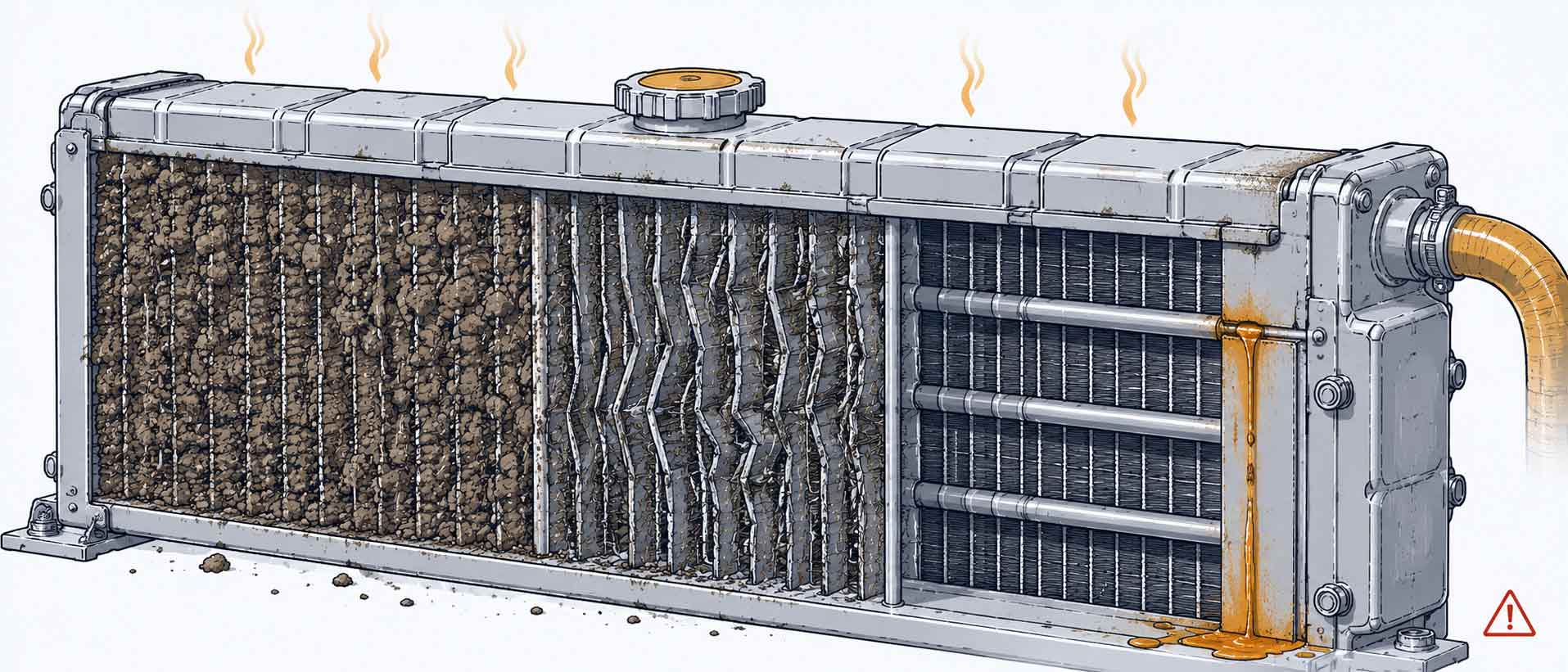
Symptoms of a dirty or failing radiator: rising coolant temperature, frequent high-temperature shutdowns, coolant loss, visible leaks, steam, and a sweet coolant smell.
When it goes bad: the engine overheats, derates power, and trips a high-temperature shutdown — and can warp the head or blow the gasket if ignored. Common faults: a blocked or dirty core, coolant leaks, a failed cap, a failed fan or belt, and low coolant.
A blocked radiator is the number-one cause of generator overheating — see our generator overheating causes & fixes guide.
04Remote radiators
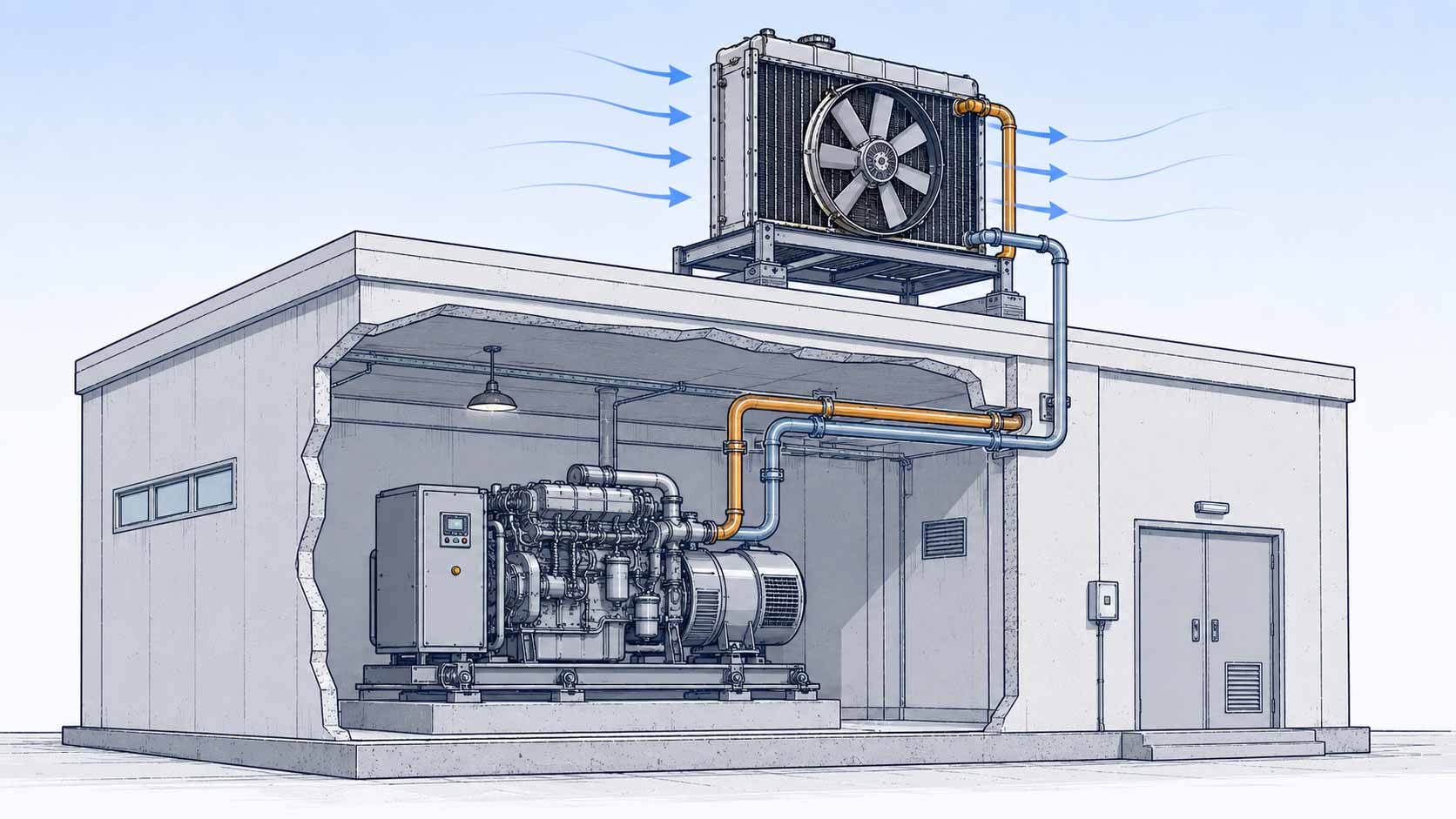
A remote radiator is mounted away from the engine — often on a roof or outside wall — and connected by coolant piping. It's used for indoor or enclosed installs where local airflow is limited, such as basement or data-center generator rooms.
Benefits: better heat rejection in tight spaces, lower in-room noise and heat, and a flexible layout. Note: longer piping means more coolant volume and higher pump head, so the system must be engineered for the distance and height.
05Sizing & replacement
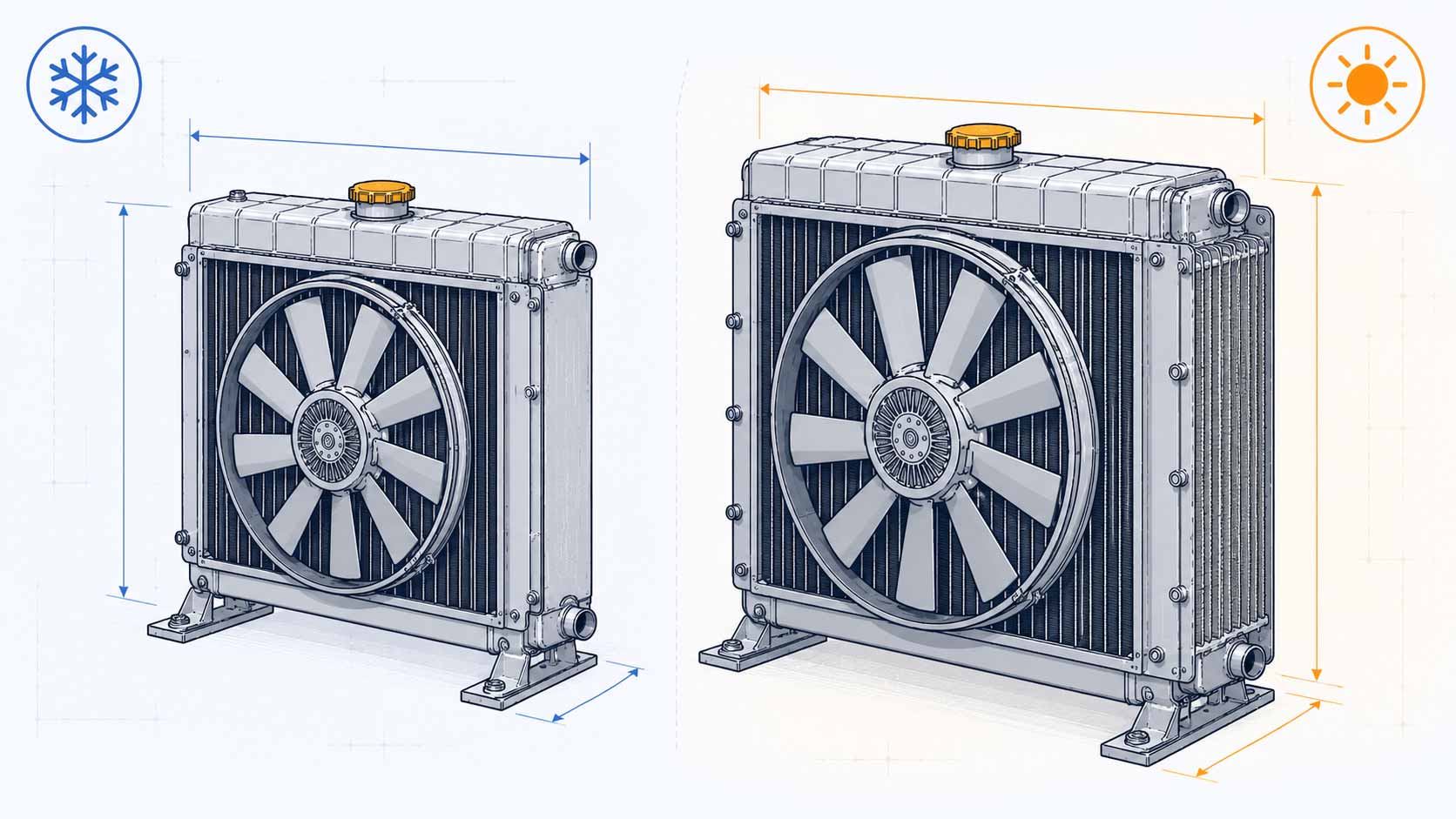
A diesel generator radiator is sized to the engine's power output and the site's ambient temperature. In hot climates a high-ambient (“tropical”) core is specified so the set runs at full load without derating.
When to replace: when the core is corroded beyond cleaning, leaking irreparably, or undersized for a hotter location. Choose an OEM radiator or a quality aftermarket equivalent matched to the core size and inlet/outlet layout.
06Frequently asked questions
Written and reviewed by Smith Parkson, Power Systems Engineer at ASO Genset · Last updated June 2026.