
Irrigation Pump Generators: Sizing & Selection
Match the generator to the pump — running kW, starting surge, and field duty — for wells, sprinklers and center pivots.
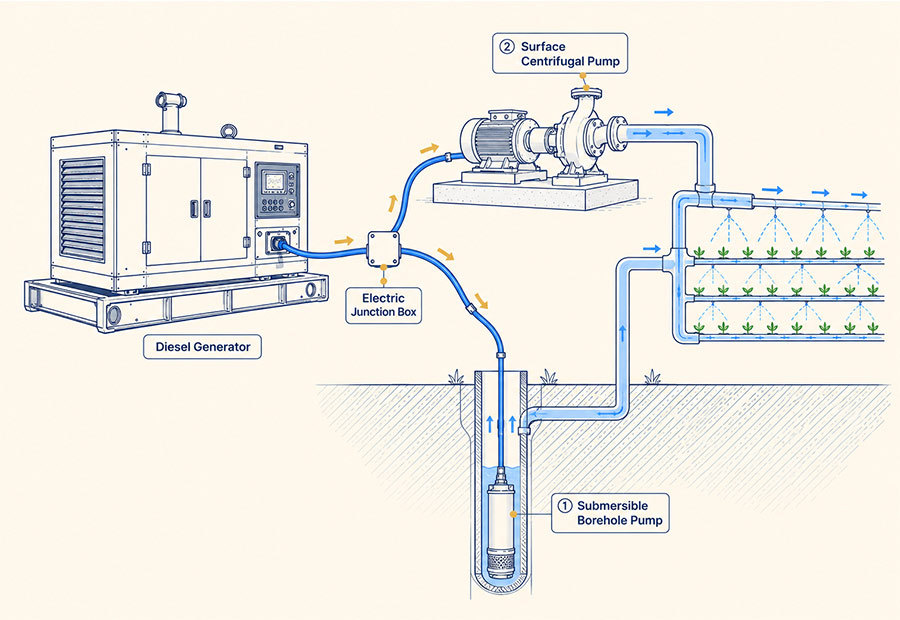
01Can a generator run an irrigation pump?
Yes — and on remote fields it is often the only option. There are two set-ups: an electric pump powered by a generator (submersible borehole pumps, surface centrifugal pumps, sprinkler and drip systems), or an engine-driven pump that moves water mechanically without electricity. This guide covers the first: matching a diesel generator to electric irrigation pumps and pivot systems.
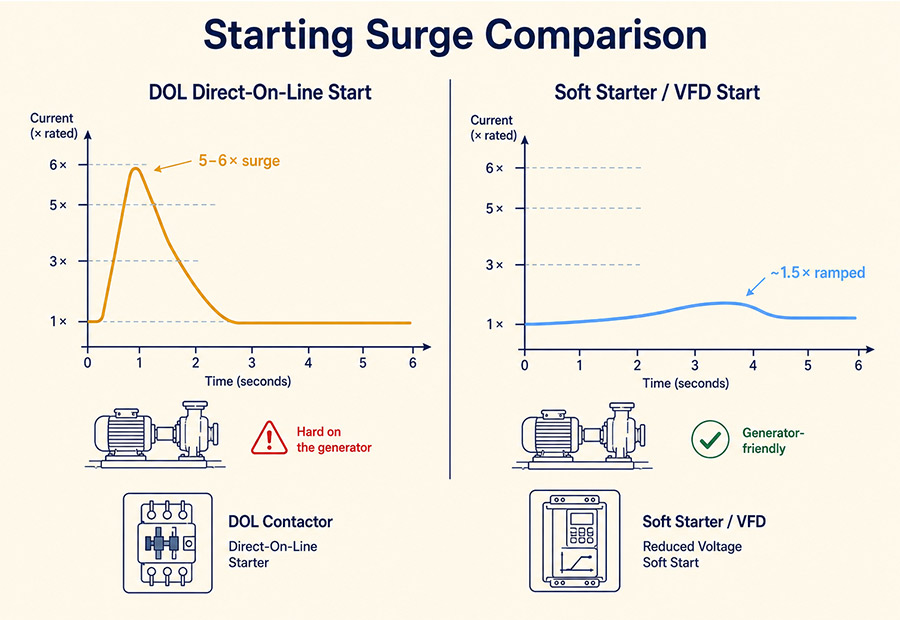
The critical detail is motor starting. Pumps are induction motors: at start they draw far more than their nameplate rating. Get the surge wrong and the generator trips, stalls, or slowly cooks the pump motor with low voltage.
02Generator sizing for irrigation pumps
Start from the pump’s rated kW (1 HP ≈ 0.75 kW), then apply the starting method. Direct-on-line (DOL) is simple but demands the biggest generator; a soft starter or VFD cuts the surge and lets you run a much smaller set.
Multiple pumps? Stagger the starts — size for the largest motor’s surge plus the running load of the rest. High-ambient sites should also allow for temperature derating.
Typical pairings (pf 0.8, one pump starting at a time) — indicative figures; share your motor data and we’ll confirm the kVA:
03Center pivots & remote irrigation power
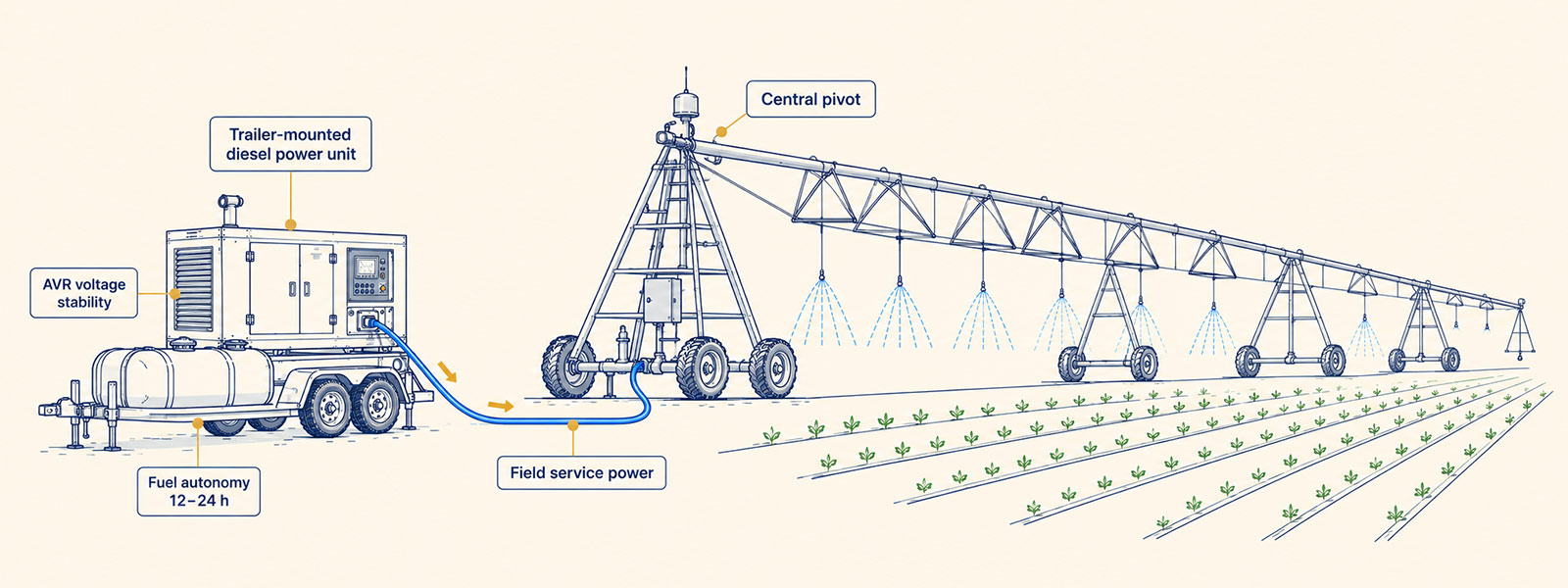
Center pivots and remote boreholes usually sit far from the grid, so they run on dedicated diesel power units — skid- or trailer-mounted generators with large fuel tanks, weather canopies and simple auto-start. What matters in the field:
- Fuel autonomy: a tank sized for at least a full irrigation shift (12–24 h) without refuelling.
- Dust & heat: tropical-rated radiators and good air filtration — chaff and dust clog cores fast in season.
- Voltage stability (AVR): pivots combine drive motors and controls; poor regulation causes nuisance faults.
- Mobility: trailer mounting lets one set serve several pump points across the season.

04PTO generator vs dedicated diesel genset
A PTO generator runs off your tractor’s power take-off shaft — cheap to buy and fine for occasional pumping. A dedicated diesel genset costs more upfront but frees the tractor, runs continuously all season, and can back up the rest of the farm too.
05Fuel & runtime for all-day irrigation
Irrigation runs long hours, so fuel is the real operating cost. A diesel genset burns roughly 0.2–0.25 litres per kWh; a 30 kVA set at 75% load uses about 5–6 L/hr, or 60–75 litres over a 12-hour shift — size the day tank accordingly. Run pumps at 50–80% generator load for the best efficiency and engine life.
Full figures by kVA and load: see our diesel generator fuel consumption chart · saving tips in farm fuel savings.
ASO supplies diesel gensets 8–3000 kVA with tropical-rated cooling and large fuel tanks — delivered worldwide.
Get a Sizing Recommendation06Frequently asked questions
Written and reviewed by Smith Parkson, Power Systems Engineer at ASO Genset · Last updated July 2026.